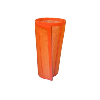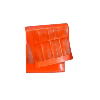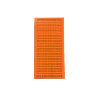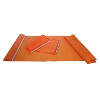
When selecting polyurethane slotted screen panels, the first step is to choose an appropriate material hardness based on the hardness, moisture content, and particle characteristics of the material being screened. High-hardness polyurethane (Shore A 85–95) is suitable for highly abrasive materials-such as ores and gravel-due to its exceptional wear resistance. Medium-hardness polyurethane (Shore A 75–85) is ideal for screening general materials, such as chemical powders and plastic granules. Low-hardness polyurethane (Shore A 65–75) is best suited for moist, agglomerating, or fragile materials, as it effectively prevents screen blinding (clogging) and material breakage. Additionally, it is essential to consider whether special properties-such as corrosion resistance, high-temperature resistance, or anti-static capabilities-are required to meet the specific demands of various industrial environments.
Polyurethane slotted screen panels are available in two structural configurations: integral (one-piece) and modular (segmented). The integral design is suitable for single-deck or small-to-medium-sized screening machines; it offers ease of installation and a consistently flat screening surface. The modular design is intended for large or multi-deck screening machines, allowing for the flexible replacement of individual modules in areas subject to localized wear, thereby reducing maintenance costs. When making a selection, it is necessary to verify the screen structure based on the specific screening machine model, screen surface dimensions, and number of decks to ensure installation compatibility. Furthermore, one must ensure that the slot width, spacing, and thickness align with the material screening requirements to guarantee both screening accuracy and production efficiency. Attention should also be paid to the screen's overall screening efficiency and durability. The slot width and arrangement directly influence the material discharge rate and screening precision; longer slots are recommended for moist or fibrous materials, while shorter slots are preferable for dry powders. While the inherent elasticity and wear resistance of polyurethane help extend the service life of the screen panels, the specific selection should still be carefully determined based on the material load and the vibration frequency of the screening machine.