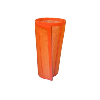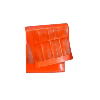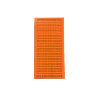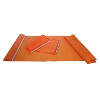
The design philosophy behind polyurethane circular vibrating screen meshes centers on two core objectives: enhancing screening efficiency and protecting the integrity of the screened materials. Utilizing high-performance polymeric polyurethane materials, the screen mesh is engineered to harmonize with the unique circular vibration trajectory of the screening machine. This synergy ensures that materials are distributed uniformly across the screen surface and subjected to thorough vibration, allowing particles to pass rapidly through the apertures while effectively preventing clogging and agglomeration. Furthermore, the inherent elasticity of the polyurethane material serves a dual purpose: it not only minimizes material breakage rates but also facilitates the passage of fine particles, thereby enabling high-precision screening.
During the design process, significant emphasis is placed on the material's wear resistance and structural stability. The screen's thickness, aperture size, and hole geometry are meticulously optimized to ensure that the mesh retains its structural integrity and stable shape even under conditions of high-frequency vibration, thereby extending its operational lifespan. Concurrently, a modular or segmented design approach is widely adopted to facilitate ease of on-site installation, removal, and maintenance. This design philosophy embodies the objective of minimizing downtime and reducing maintenance costs, ensuring that the screen mesh sustains high levels of performance throughout prolonged periods of continuous production.
The design of the polyurethane circular vibrating screen mesh also takes into full account the critical need to harmonize the vibration characteristics of the screening machine with the specific properties of the materials being processed. By integrating the screen's aperture shape, arrangement pattern, and surface inclination with the machine's circular vibration trajectory, the design induces an optimal bouncing and flow pattern for the materials across the screen surface, thereby guaranteeing uniform and highly efficient screening. Ultimately, the design philosophy underscores the importance of synergistic system interaction-leveraging the combined optimization of vibration dynamics, screen materials, and structural engineering-to achieve the overarching goals of high-precision screening, reduced energy consumption, and increased production output.