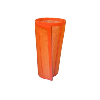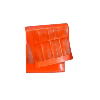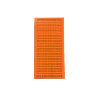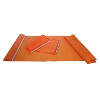
The primary function of polyurethane high-frequency screen panels is to achieve efficient screening and classification of materials. During the screening process, high-frequency vibration-combined with the inherent elasticity of the polyurethane material-causes the materials on the screen surface to bounce, roll, and tumble. This action facilitates the rapid passage of fine particles through the screen apertures while retaining larger particles on the surface, thereby achieving the objective of particle classification. The aperture size of the polyurethane screen can be precisely engineered to suit specific material characteristics, ensuring screening accuracy and enabling the separation and classification of materials with varying particle sizes, all while preventing aperture clogging and boosting production efficiency.
Polyurethane material possesses exceptional abrasion resistance and elasticity, allowing the screen panel to maintain stable performance even under conditions of prolonged high-frequency vibration and material impact. Its elastic structure serves to dampen the impact force exerted by materials upon the screen apertures, effectively preventing the fragmentation of brittle or hard materials and thereby extending the service life of the screen. Furthermore, the smooth surface of the polyurethane resists material adhesion; when combined with high-frequency vibration, this feature significantly reduces the likelihood of aperture clogging, ensuring a continuous and stable screening process, minimizing downtime required for cleaning, and enhancing overall production efficiency.