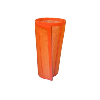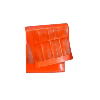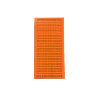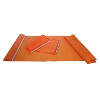
The core material of polyurethane slotted screen panels is high-molecular-weight polyurethane (PU), a polymer synthesized through the chemical reaction of polyols and isocyanates. Polyurethane possesses excellent elasticity, abrasion resistance, and corrosion resistance, enabling the screen panels to maintain stable performance-without easily cracking or deforming-even under conditions of high-frequency vibration and material impact. The hardness and elasticity of the polyurethane can be tailored to the specific characteristics of the material being screened, thereby meeting the distinct requirements for abrasion resistance and screening precision found in various industrial environments.
To enhance the abrasion resistance, structural strength, and service life of the screen panels, polyurethane slotted screens typically incorporate a specific proportion of fillers or reinforcing agents-such as calcium carbonate, talc, glass fibers, or polymeric additives. These additives increase the material's hardness and wear resistance while simultaneously improving the processing characteristics of the polyurethane, rendering the slotted structure more stable under high-frequency vibration and less susceptible to deformation or cracking. For specialized applications, high-temperature-resistant, anti-static, or corrosion-resistant additives may also be incorporated to satisfy the unique screening requirements of specific industries. Furthermore, during the manufacturing process of polyurethane slotted screens, catalysts and appropriate amounts of foaming agents are utilized to regulate the rate of the polymerization reaction and control the material's physical properties.