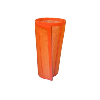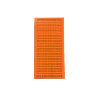
The density of polyurethane circular vibrating screen meshes is primarily determined by the inherent properties of the polymeric polyurethane material itself. The typical density range for commonly used polyurethane is approximately 1.1 to 1.3 g/cm³-a figure that represents a significant weight reduction compared to metal screen meshes (such as steel, which has a density of approximately 7.8 g/cm³). This lower density not only reduces the load on the vibrating screen machine but also facilitates easier installation and replacement, while simultaneously minimizing the impact exerted by the screen mesh on the machine's structural framework during the vibration process.
The actual density of a polyurethane circular vibrating screen mesh is influenced by both the material formulation and the manufacturing process. The incorporation of fillers-such as calcium carbonate, talc, or glass fibers-increases density while enhancing abrasion resistance and hardness; conversely, the use of small amounts of foaming agents or lightweight fillers reduces density, thereby improving elasticity and resilience. Furthermore, the uniformity of curing during the casting or molding process affects the density distribution within the screen mesh, a factor directly correlated with the mesh's durability and screening efficiency.
Density design constitutes a critical factor in ensuring the optimal performance of polyurethane circular vibrating screen meshes. A lower density facilitates rapid oscillation of the screen mesh under high-frequency vibration, thereby boosting screening efficiency; conversely, a moderate increase in density can enhance abrasion resistance and extend the product's service life. By adjusting the material formulation according to the specific type of material being processed and the model of the vibrating screen machine, manufacturers can achieve an optimal balance between density, hardness, and elasticity, thereby effectively meeting the diverse screening requirements of various industrial environments.