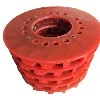
The wear resistance of polyurethane wear-resistant components is typically evaluated through friction and wear tests performed on the material, and is subsequently classified into grades based on the degree of wear exhibited. Common testing methods include the grinding wheel abrasion test, the drum abrasion test, or the Rockwell hardness abrasion test; by measuring the amount of material loss per unit of time or distance, the specific wear-resistance grade is determined. Wear-resistance grades are generally categorized into three classes: high wear resistance, medium wear resistance, and standard wear resistance. High wear-resistance polyurethane components are suitable for operating conditions involving high speeds, high impact, or materials of high hardness; medium wear-resistance components are appropriate for conditions involving moderate impact or material hardness; while standard wear-resistance components are designed for low-impact environments, materials of low hardness, or light-duty equipment.
The wear-resistance grade directly dictates both the service life and the economic efficiency of polyurethane components. Although components with a high wear-resistance grade entail slightly higher initial costs, they offer superior longevity. Medium wear-resistance grades are suitable for standard conveying and screening equipment, striking a balance between cost-effectiveness and durability. Standard wear-resistance grades are predominantly utilized in low-abrasion environments-such as those found in light industry, food processing, and environmental protection sectors-thereby helping to minimize procurement costs. By making a judicious selection of the appropriate wear-resistance grade, manufacturers can optimize their material investment and maintenance expenditures while simultaneously ensuring the stable and reliable operation of their equipment.