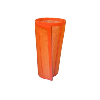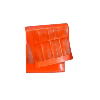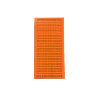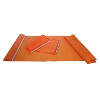
Polyurethane wear-resistant parts are made of high-molecular-weight polyurethane material, possessing excellent wear resistance, impact resistance, and elasticity. Its wear resistance far exceeds that of ordinary rubber or some metal materials, allowing for prolonged use in high-friction, high-impact environments without significant wear. Polyurethane also exhibits good corrosion resistance, acid and alkali resistance, oil resistance, and aging resistance. The material's hardness and elasticity can be adjusted through formulation to meet the needs of different equipment and material types.
The maintenance cycle for wear-resistant polyurethane components is primarily influenced by the equipment's operating environment, material characteristics, and the performance properties of the components themselves. In high-wear and high-impact operating conditions-such as those found in mining crushers, ball mills, and aggregate conveying equipment-component wear occurs more rapidly, necessitating more frequent inspection and maintenance. Conversely, in low-wear and low-impact environments-such as those involving food processing, light industry, or environmental protection equipment-the maintenance cycle can be appropriately extended. Material properties-including hardness, particle size, moisture content, and corrosiveness-also directly impact the rate at which components wear down. Furthermore, variations in a component's hardness, density, and wear-resistance rating will result in differing maintenance cycles; components featuring high wear resistance and high hardness typically require less frequent maintenance.
Generally, wear-resistant polyurethane components should undergo routine inspections on a quarterly or semi-annual basis to detect localized wear, cracks, or deformation. For equipment subject to high wear, the inspection frequency may be shortened to a monthly interval, with particular attention paid to critical areas such as liners, chutes, and vibrating screen decks. During inspections, any components exhibiting severe wear or those that compromise the equipment's normal operation should be promptly replaced or repaired. Regularly cleaning accumulated deposits and residual materials from component surfaces, while maintaining a clean operating environment, can effectively extend their service life. By scientifically establishing maintenance schedules and adhering to standardized operating procedures, it is possible to effectively prolong the lifespan of wear-resistant polyurethane components, thereby reducing equipment maintenance costs and enhancing production efficiency.