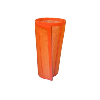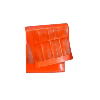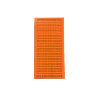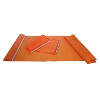
Polyurethane high-frequency screen panels serve as core components in high-frequency screening equipment across industries such as mining, sand and gravel processing, coal washing, and environmental protection. Renowned for their superior abrasion resistance, anti-clogging properties, excellent elasticity, and extended service life, these panels are widely compatible with a diverse range of high-frequency vibrating screening and dewatering machinery.
Primarily utilized in high-frequency vibrating screens-devices characterized by high vibration frequencies and low amplitudes-these panels are ideally suited for the precision screening of fine-grained materials. Under conditions of intense high-frequency vibration, polyurethane screens maintain exceptional stability; they resist hole clogging and material jamming, thereby significantly boosting screening efficiency. In the context of dry tailings screening, these panels facilitate the dewatering, desliming, and classification of mining tailings; their resistance to acids, alkalis, and corrosion enables them to perform reliably even within complex and harsh industrial environments.
In fine sand recovery systems, polyurethane high-frequency screens act as critical components, effectively recovering lost fine sand to increase the yield of finished sand and gravel products while simultaneously minimizing resource waste. Dewatering screens also represent a major application area; whether deployed in sand washing plants, stone quarries, or coal slime processing facilities, these panels enable the rapid dewatering and desliming of materials, thereby reducing the moisture content of the final products.
Furthermore, these panels are frequently employed in slurry separators, sand-slurry separation units, and general vibrating screens, making them suitable for applications ranging from sand and gravel aggregate processing and mineral beneficiation to coal washing and municipal sludge treatment. Compared to traditional metal screen panels, polyurethane high-frequency screens are better adapted to high-frequency vibration environments; offering lower noise levels, easier replacement, and reduced operating costs, they represent the ideal screening medium for modern, advanced screening equipment.