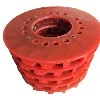
Polyurethane high-frequency screen panels are primarily manufactured from high-molecular-weight polyurethane materials; their structure typically consists of two distinct parts: a surface screening layer and a supporting layer. The surface screening layer is composed of highly wear-resistant polyurethane, precision-molded to form a uniform array of apertures. The size, shape, and arrangement of these apertures can be customized-based on the characteristics of the material particles and specific screening requirements-to satisfy diverse needs regarding screening precision and throughput. The supporting layer typically utilizes high-strength polyurethane or a steel framework to enhance overall structural rigidity, thereby ensuring that the screen panel remains resistant to deformation under high-frequency vibration.
Polyurethane material inherently possesses excellent elasticity and impact resistance, enabling it to effectively absorb the impact forces exerted by materials during the screening process, thereby minimizing localized wear and the risk of cracking. Furthermore, polyurethane exhibits strong resistance to chemical corrosion, making it suitable for environments involving acidic, alkaline, or high-moisture materials; this ensures the screen panel maintains stable, long-term operation even under complex working conditions. Compared to traditional metal screen panels, polyurethane screens are lighter in weight and offer superior flexibility; this not only facilitates easier installation and replacement but also mitigates the impact of vibration transmission on the screening machine's frame and supporting structures, thereby extending the overall service life of the equipment.